
1. Introduction: The Death of the “Blue Link” Era
In 2026, search is no longer a directory—it’s a conversation. Users don’t scroll through ten blue links anymore; they ask questions and expect instant, context-aware answers. This shift has fundamentally changed how visibility works online.
Traditional SEO focused on ranking positions one through ten. Today, AI Search Optimization is about something entirely different: becoming the trusted source that AI systems reference when generating answers. If your content isn’t structured, authoritative, and conversational, it won’t appear—no matter how strong your classic SEO once was.
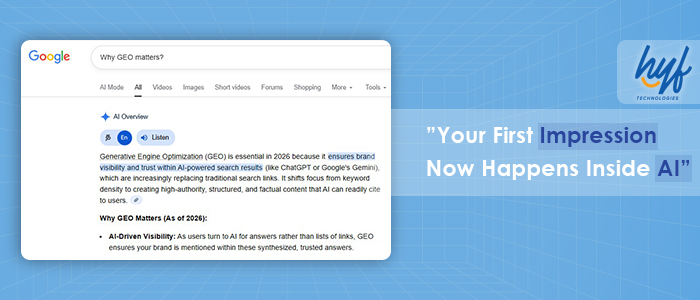
2. Why AI Search Is Redefining the Website Experience
User Expectations Have Changed
AI-powered search experiences prioritize speed and clarity. Users expect direct answers, summaries and recommendations without navigating multiple pages. This has raised the bar for AI search website experience, where usefulness begins before a click even happens.
The Zero-Click Reality
Roughly 60% of AI search sessions now end without a website click. While this may sound alarming, it reflects a new reality: websites must deliver value within AI-generated responses, not just after the user lands on a page.
Quality Over Quantity
The upside? Traffic from AI platforms is more intentional. Users who do click through show 27% lower bounce rates and spend 38% more time on retail and service-based websites. AI search filters out casual browsing and delivers high-intent visitors.
3. Mastering Conversational AI Search
Natural Language Is King
Users no longer type fragmented keywords like “best CRM software.” Instead, they ask multi-turn questions such as, “What’s the best CRM for small businesses that integrates with email?” This evolution makes Conversational AI Search, the dominant discovery model.
Optimization Tactics That Work
Direct Answer Blocks
Each key section of your content should begin with a clear, 40–50 word answer. These concise summaries help AI systems extract accurate information for overviews and citations.
Question-Based Headings
Using H2s and H3s that mirror real user questions increases relevance and improves AI comprehension. Think less like a marketer and more like the user asking the question.
Educational Content Wins
Over 88% of searches triggering AI Overviews are informational, proving that in-depth, educational content is essential for long-tail and discovery-driven queries.
4. Generative Engine Optimization (GEO): The 2026 Mandate
Content as Data
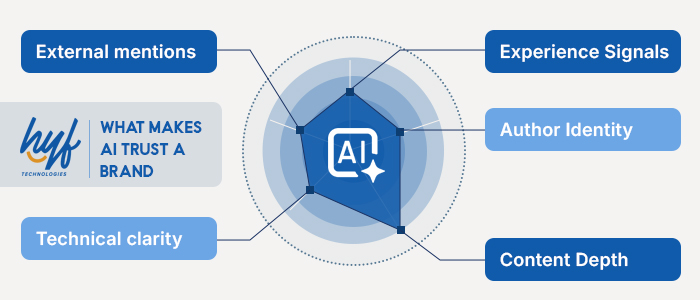
Generative Engine Optimization treats your website as a structured dataset for AI models. Clear definitions, factual accuracy and internal consistency determine whether AI trusts your content.
Authority and E-E-A-T
AI-driven search favors content created by people and brands that demonstrate real-world experience, deep understanding, industry credibility and consistent trust signals. AI systems favor content written or reviewed by credible authors with real-world credentials.
Technical Foundations for AI Visibility
- Schema.org (JSON-LD): Helps AI understand entities, products, services and relationships.
- llms.txt Protocol: Guides Large Language Models to your most valuable and authoritative pages.
Brands with strong third-party mentions are 6.5 times more likely to be cited by AI, especially when referenced on platforms like Reddit, Wikipedia, or industry forums.
5. The Hybrid UX: Designing for Humans and Machines
Speed Is Non-Negotiable
Even in AI-driven discovery, performance matters. A one-second delay in page response can reduce conversions by 7%, making site speed a ranking and revenue factor.
Multimodal Search Is Standard
Text is no longer dominant. Users increasingly search using voice commands and images. Websites must support structured visuals, accessible media and descriptive metadata.
Personalization at Scale
AI-driven personalization can boost engagement by up to 80%. Dynamic content, contextual recommendations, and adaptive layouts ensure relevance for both human users and AI systems.
6. Conclusion: Staying Visible in 2026
Success in 2026 isn’t defined by raw traffic numbers—it’s defined by citation share. If AI systems reference your brand, your visibility compounds across platforms, even without direct clicks.
To stay competitive, businesses must move beyond traditional SEO and fully embrace AI Search Optimization. Focus on structured data, conversational intent, fast and flexible user experience and authoritative brand mentions. In an AI-first search landscape, relevance isn’t earned through rankings—it’s earned through trust.